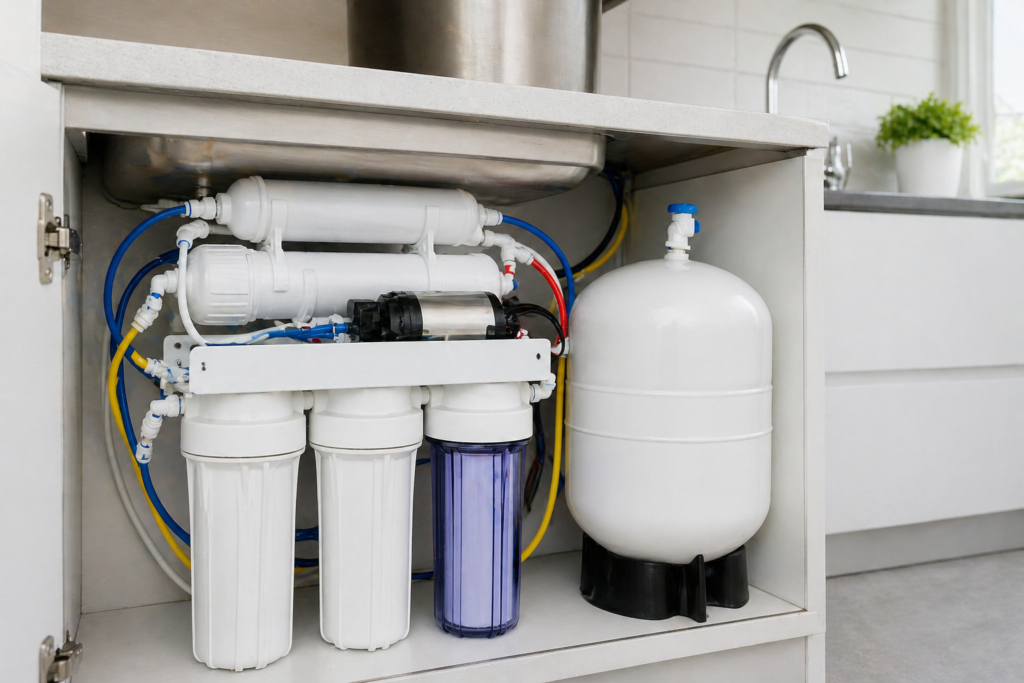

Water that looks clear may still contain dissolved contaminants that affect safety and plumbing performance. Over time, mineral buildup, chemical residues, and sediment can impact appliances and drinking water quality. A reverse osmosis water filtration system addresses these concerns by removing impurities at a microscopic level.
The process uses a semi-permeable membrane to filter out contaminants such as lead, chlorine, and dissolved salts. This improves taste, reduces scale buildup, and supports long-term plumbing efficiency. Compared to standard filters, reverse osmosis systems provide deeper purification and more consistent results.
Common signs that indicate the need for improved filtration include residue on fixtures, unusual taste, and frequent appliance maintenance. Installing a reverse osmosis water filter under the sink or at a dedicated tap ensures access to cleaner water where it is needed most.
Routine maintenance helps maintain system performance and ensures reliable water quality over time. Read More