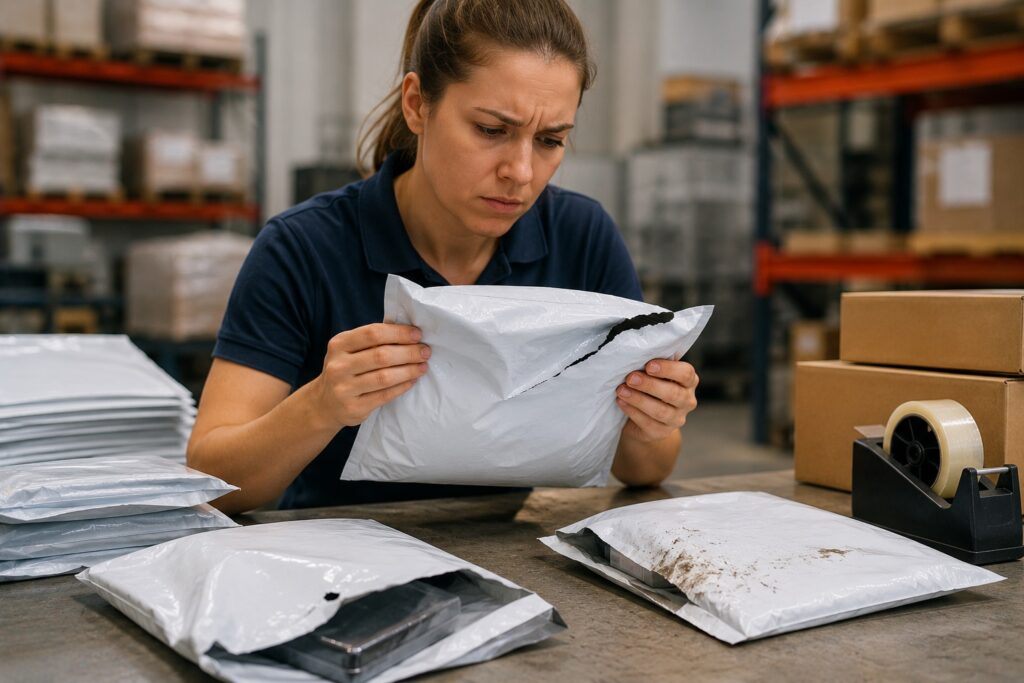

Damaged shipments, rising replacement costs, and delayed deliveries often begin with one overlooked packaging decision. Many businesses focus on appearance or price when sourcing mailing materials while ignoring the technical specifications that affect shipping performance.
Poor envelope selection can lead to torn packages, exposure to moisture, processing delays, and product loss during transit. Choosing the right plastic mailing envelopes helps maintain product protection, improve shipping consistency, and support long-term operational efficiency.
1. Using the Wrong Thickness for Plastic Mailing Envelopes
Film thickness directly affects the strength and durability of plastic mailing envelopes. Selecting the wrong thickness can create unnecessary shipping risks or lead to excessive material usage.
Lightweight products such as apparel and soft goods generally perform well with thinner films that maintain flexibility while reducing packaging weight. Heavier or bulkier products require thicker films that can withstand additional stress during sorting and transportation.
Material quality also plays an important role. High-quality resin formulations allow manufacturers to reduce film gauge while maintaining puncture resistance and load capacity. This approach helps reduce excess material usage without compromising packaging performance.
When the thickness aligns with the shipped product, envelopes maintain structural integrity during transit and help prevent seam failures or package blowouts.
2. Overlooking Opacity in Clear Mailing Envelopes
Visibility and privacy must remain balanced when selecting clear mailing envelopes. Some products benefit from visible packaging that allows quick identification, while other shipments require greater discretion during transportation.
Many businesses now use mailing envelopes that combine transparent fronts with opaque backings. This design supports product visibility while helping reduce direct exposure of shipping contents.
Products such as promotional kits or retail-ready items may benefit from transparent packaging. On the other hand, higher-value goods often require stronger opacity to improve shipment security. Opaque layers also help reduce unwanted attention during handling and delivery.
Packaging selection should align with both operational needs and customer expectations. Businesses seeking secure packaging solutions can review available wholesale envelope options to identify materials designed for improved transit protection.
3. Ignoring Durability in Plastic Shipping Envelopes
Not all polyethylene films perform the same under shipping pressure. Generic materials may tear more easily when exposed to repeated handling, sharp edges, or environmental stress.
Advanced film structures offer greater tear resistance and improved flexibility compared to lower-grade alternatives. Features such as fused seams and self-sealing closures also strengthen overall package reliability during transportation.
Durable plastic shipping envelopes often outperform standard paper mailers in demanding shipping conditions. Strong film barriers help protect contents from moisture, cold air exposure, and rough handling during long transit routes.
Reduced product damage also helps lower replacement activity and improves fulfillment consistency. Reliable packaging minimizes the need for reshipments while supporting smoother customer experiences.
4. Overlooking Carrier Compatibility and Handling Requirements
Modern shipping systems rely heavily on automated sorting equipment. Packaging that fails to meet handling requirements can create processing disruptions and shipping delays.
Film texture, envelope dimensions, and sealing consistency all influence how packages move through automated systems. Incorrect materials may stick, jam, or shift during processing, creating interruptions across distribution channels.
Proper sizing also matters. Oversized mailers can create excess movement during transit, while undersized packaging increases stress on seams and closures. Matching envelope size to product dimensions supports better compliance with carrier handling standards.
Many online marketplaces also maintain packaging guidelines designed to improve shipping consistency. Testing packaging samples through local postal or carrier hubs helps identify potential handling issues before large-scale deployment.
Final Considerations for Selecting Plastic Mailing Envelopes
Choosing the right mailing envelope requires more than selecting a basic shipping material. Thickness, opacity, durability, and carrier compatibility all contribute to packaging performance and operational efficiency.
Professional customization capabilities also influence packaging effectiveness. Flexographic printing handled directly by the manufacturer supports consistent branding while maintaining production quality. Custom sizing and tailored resin formulations further improve protection and shipping efficiency across different applications.
Local manufacturing and rigorous quality assurance processes also help maintain consistent product standards and dependable supply availability.
Reliable packaging decisions support stronger shipment protection, reduced operational disruption, and improved customer satisfaction. Businesses reviewing plastic shipping envelopes should carefully evaluate material quality, transit performance, and customization options. Contact PolyPak Packaging for a range of solutions designed to support secure and efficient shipping operations.