
Healthcare laundry operations demand strict control over airborne particles, contaminants, and fiber buildup. Every stage of the process must support hygiene, including the management of airflow and lint in drying systems. Integrated lint management in industrial dryers is critical to maintaining clean airflow and preventing contamination.
Not all drying systems are engineered for healthcare-grade performance. While many facilities rely on basic configurations, infection control requires greater airflow precision and containment. The difference between standard dryer systems and healthcare-focused designs becomes clear when safety, compliance, and air quality are under constant scrutiny.
Why Lint and Airflow Management Matters in Healthcare Laundry Environments
Lint is more than a byproduct of drying. It can carry microorganisms, dust, and contaminants that compromise air quality. In healthcare environments, uncontrolled lint circulation increases the risk of cross-contamination.
Properly engineered airflow systems within dryers help capture and direct lint efficiently, reducing airborne spread. This is essential in facilities processing high volumes of healthcare textiles, where hygiene standards must be maintained at all times.
How Standard Dryer Systems Handle Lint and Airflow
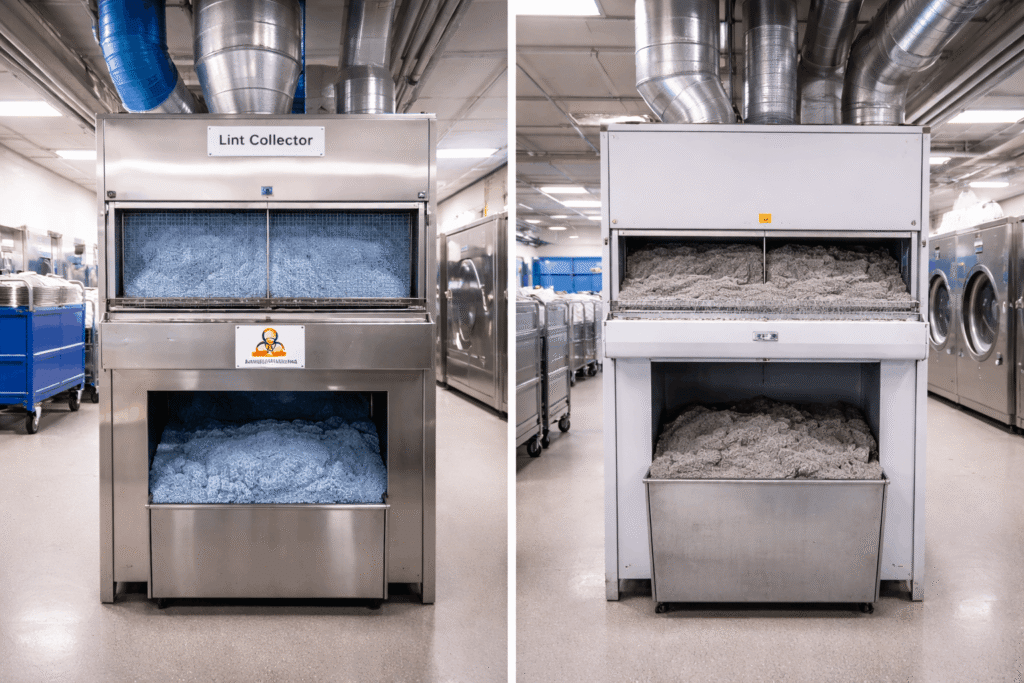
Standard commercial dryers are typically designed to remove visible lint and maintain basic airflow. These systems rely on internal screens and simple airflow paths to separate lint from exhaust air.
While effective for general laundry operations, these configurations may not provide the level of containment required in healthcare settings. Fine particles can remain suspended in the airflow, increasing the risk of contamination and inconsistent air quality.
What Defines a Healthcare-Optimized Dryer System
Healthcare-focused dryer systems are engineered to manage both visible lint and fine airborne particles through advanced airflow design. Instead of relying on basic lint capture alone, these systems emphasize:
- Controlled airflow pathways
- High-efficiency lint separation within the dryer system
- Consistent exhaust management
- Reduced recirculation of airborne particles
The objective is not just lint removal, but maintaining controlled air movement throughout the drying process to support infection-control standards.
Infection-Control Risks of Inadequate Airflow and Lint Handling
When airflow and lint management are not properly engineered, airborne contamination can increase within laundry facilities. Lint particles may carry bacteria and microorganisms, creating exposure risks during processing.
Inefficient airflow also leads to internal buildup, which restricts performance and increases maintenance demands. Over time, this impacts both operational efficiency and hygiene outcomes.
Engineering Differences That Improve Infection Control
Advanced dryer systems designed for healthcare environments incorporate airflow engineering that goes beyond basic filtration. Key differences include:
- Directed airflow that prevents lint recirculation
- Integrated lint management within sealed dryer systems
- Optimized exhaust design for consistent particle removal
- Stable airflow performance under high-volume loads
These features improve both system efficiency and contamination control, making them suitable for healthcare laundry operations.
Compliance and Healthcare Standards to Consider
Healthcare facilities must meet strict guidelines related to air quality and contamination control. Dryer system design plays a supporting role in meeting these requirements.
Systems engineered for healthcare applications prioritize airflow consistency, lint containment, and operational reliability. Selecting the right equipment helps facilities maintain compliance while supporting long-term performance.
Why the Right Dryer System Matters for Healthcare Safety
Choosing a dryer system with integrated airflow and lint management capabilities directly impacts safety and efficiency. Facilities that prioritize engineered airflow control reduce contamination risks while improving throughput.
Consolidated Laundry Machinery delivers industrial dryer systems designed for demanding environments, where airflow performance and operational consistency are critical.
Request a consultation today to evaluate the right drying solution for healthcare-focused operations.