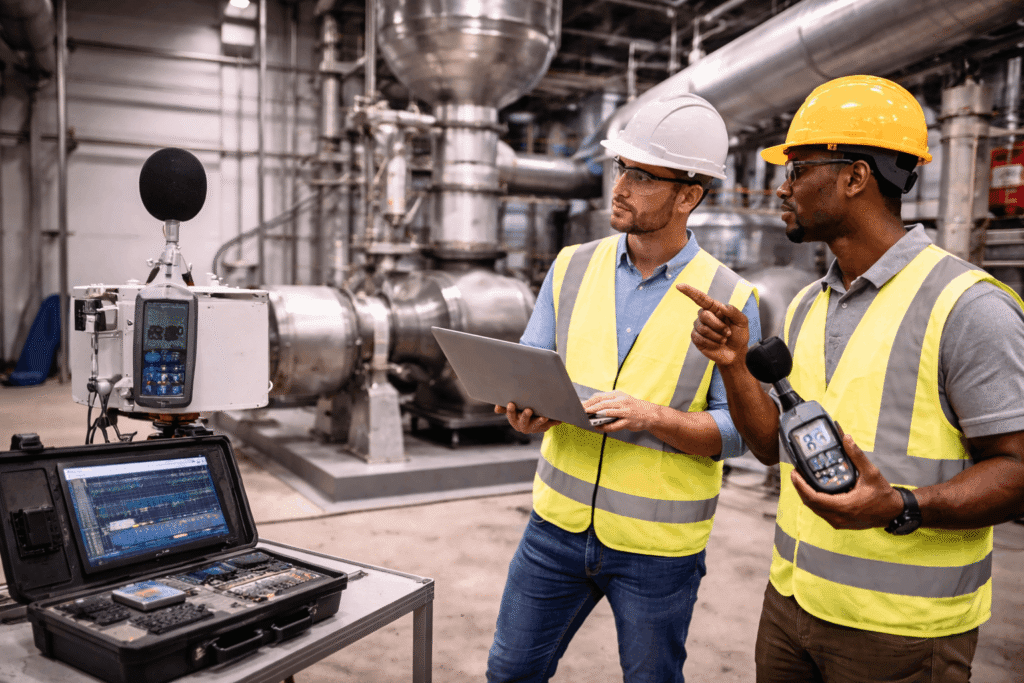

Construction and infrastructure projects operate within environments where sound and vibration must be carefully managed. Equipment operation, transportation corridors, and building systems can generate acoustic impacts that affect nearby structures, regulatory approvals, and project timelines. When these factors are not properly addressed, noise complaints, compliance challenges, and operational limitations can arise.
Basic noise measurement services often appear to provide a straightforward solution by capturing sound levels at a specific location and moment in time. However, complex construction environments require a broader engineering perspective. Noise and vibration consultants evaluate not only the measured data but also the sources, transmission paths, and long-term implications of acoustic conditions.
1. The Difference Between Measurement and Engineering Oversight
Noise measurement services typically focus on recording sound levels using calibrated equipment. The results provide a snapshot of acoustic conditions but rarely explain why certain noise levels occur or how they might change under different operating scenarios.
By contrast, noise and vibration consultants analyze measurement results within a broader engineering framework. They assess source characteristics, structural transmission paths, and potential mitigation strategies to ensure acoustic performance aligns with project requirements.
2. Regulatory Compliance Requires More Than Testing
Regulatory frameworks governing environmental noise and construction vibration often require more than basic measurements. Authorities typically expect technical interpretation, predictive analysis, and documented mitigation strategies.
Engaging vibration consultants ensures that monitoring programs meet regulatory expectations and produce reports that are technically defensible during environmental reviews or compliance investigations.
3. Proactive Risk Mitigation vs Reactive Data Collection
Measurement alone is often reactive. Data is collected after a complaint or compliance concern arises. While useful, this approach does not prevent issues from developing.
Noise and vibration consultants apply proactive analysis to identify risks before they escalate. By evaluating potential impacts early, consultants help project teams implement mitigation measures that reduce operational disruptions.
4. Managing Structure-Borne Vibration and Complex Impacts
Sound transmitted through air represents only one component of acoustic performance. Structure-borne vibration generated by construction activity, mechanical systems, or transportation infrastructure can travel through building components and the surrounding ground.
Qualified vibration consultants analyze these transmission pathways and evaluate how vibration affects nearby structures, sensitive equipment, or occupied spaces.
5. Documentation That Protects Developers and Contractors
Accurate documentation plays a crucial role in protecting project stakeholders. Measurement data alone rarely provides the technical explanation required to resolve regulatory inquiries or community concerns.
Reports prepared by noise and vibration consultants include analyses, interpretations, and recommendations to support compliance verification and, when necessary, dispute resolution.
6. Long-Term Monitoring and Operational Stability
Some projects require monitoring programs that extend beyond construction into operational phases. Industrial facilities, infrastructure projects, and energy developments often rely on continuous monitoring to verify compliance with environmental limits.
While noise measurement services may capture short-term conditions, consulting-led monitoring programs evaluate trends over time and guide adjustments that maintain long-term acoustic stability.
Engineering Expertise Is a Strategic Safeguard
Acoustic challenges within construction and infrastructure projects extend beyond simple sound measurement. Managing these conditions effectively requires engineering analysis, regulatory awareness, and long-term monitoring strategies.
Valcoustics provides consulting-engineer-led acoustic services that combine noise measurement services, monitoring programs, and engineering analysis to support compliance and operational reliability. By working with experienced noise and vibration consultants, project teams gain the technical insight required to manage acoustic risks proactively.
Contact Valcoustics to discuss monitoring and consulting solutions for upcoming projects.