
Heavy lifting operations depend on more than a single component. Every successful lift is supported by a combination of structural hardware and mechanical systems working together. Understanding the difference between rigging equipment and rigging hardware helps industrial teams determine where to prioritize investment for performance, durability, and long-term value.
While both categories are essential, their roles differ significantly. Selecting the right mix of components ensures load control, safety compliance, and operational efficiency. Murphy Industrial Products, Inc. supplies a full range of industrial lifting solutions designed to support demanding heavy-lift environments.
Rigging Hardware – Clamps, Shackles, Turnbuckles
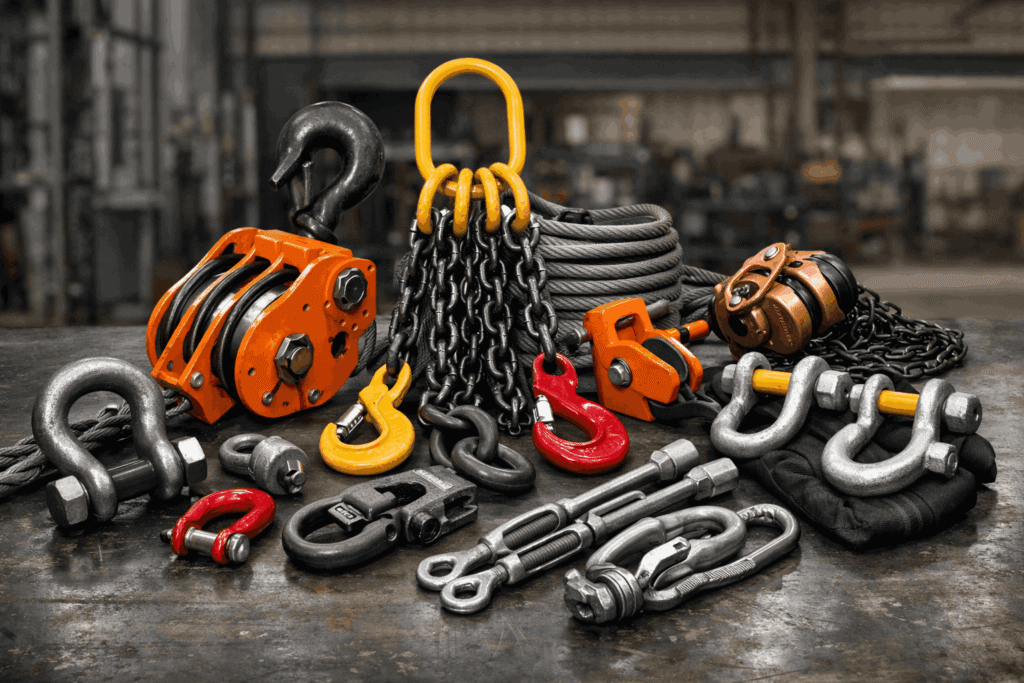
Rigging hardware refers to the components that connect lifting systems. These include shackles, beam clamps, turnbuckles, lifting eyes, and related connectors. Though often small compared to primary lifting systems, hardware plays a critical structural role.
Shackles connect slings to hooks or lifting lugs. Turnbuckles adjust tension within support systems. Beam clamps create secure anchor points along structural beams. Each piece of rigging hardware must be rated to handle applied loads and compatible with the overall lifting setup.
Hardware is typically passive in function, meaning it does not generate force but transfers it. Strength, material grade, and proper sizing determine its reliability. Even in high-capacity lifts, under-rated hardware can compromise the entire system.
Murphy Industrial Products, Inc. emphasizes matching hardware ratings with overall lift capacity to prevent weak points in rigging assemblies.
Rigging Equipment – Hoists, Lugs, Slings
In contrast, rigging equipment includes active or load-bearing components such as hoists, lifting slings, spreader beams, and fixed lifting lugs. These products directly engage the load and manage lifting force.
Hoists provide vertical lifting power. Slings distribute load weight and adapt to various configurations. Lifting lugs create designated attachment points on machinery or fabricated structures.
Because these components directly support and carry the load, they often represent a larger investment than individual hardware components. However, their performance determines lift stability and efficiency.
Murphy Industrial Products, Inc. supplies industrial-grade lifting products engineered for repetitive and high-capacity use across construction, fabrication, and manufacturing environments.
Use Cases and Crossover Points
In practice, rigging hardware and equipment function together. A heavy lift involving structural steel may use slings to engage the load, shackles to connect slings to hooks, and a hoist to provide vertical movement. None of these components operate independently.
There are crossover points where hardware and equipment roles overlap. For example, lifting clamps may serve as both connection hardware and active load engagement tools. Selecting the right combination depends on load shape, weight, and lift path.
For heavy lifts involving irregular or offset loads, investment in higher-grade slings and hoists may deliver greater value. In repetitive lifts with consistent configurations, durable hardware reduces long-term replacement costs.
Cost vs. Performance Comparison
Cost considerations vary between categories. Individual hardware components are generally lower in cost but must be replaced more frequently if they are subject to wear. Investing in higher-quality rigging hardware can reduce downtime and improve inspection outcomes.
On the other hand, rigging equipment often involves higher upfront costs. However, high-performance hoists, slings, and lifting systems deliver efficiency gains and long-term durability when properly maintained.
Evaluating value requires looking beyond purchase price. Performance consistency, safety margins, inspection ease, and lifecycle durability all influence total cost over time.
Murphy Industrial Products, Inc. works with industrial buyers to balance cost and performance across complete lifting systems rather than focusing on isolated components.
Choose Based on Load Type and Lift Environment
There is no universal answer to whether rigging equipment or rigging hardware offers more value. Both categories are essential, and each contributes differently to heavy-lifting performance.
For high-capacity or complex lifts, investing in reliable lifting products delivers measurable operational value. For routine lifts with established configurations, durable hardware ensures consistent load transfer and system integrity.
Choosing the right balance depends on load type, lift frequency, and environmental demands. When evaluated as a complete system, properly selected lifting components provide the greatest value and long-term performance. For more information, contact us now!