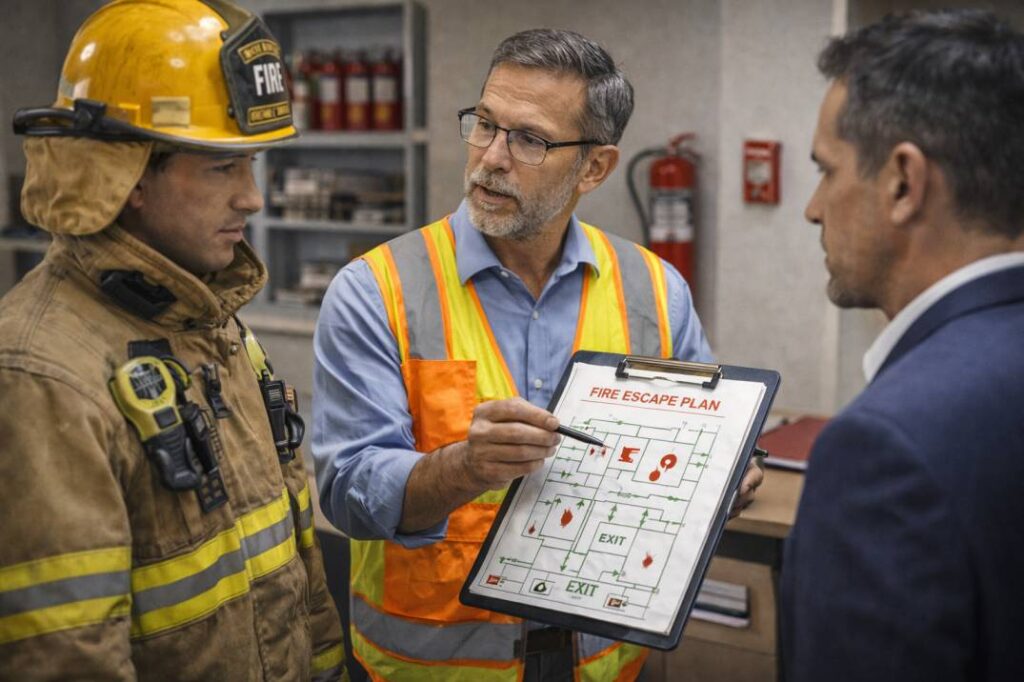

Modern industrial and infrastructure projects are becoming more complex, requiring a coordinated approach to safety and risk management. As facilities evolve, so does the role of fire safety consultants, who guide the integration of comprehensive systems that address both fire and explosion hazards. Their expertise ensures that protective measures are not only practical but also aligned with stringent compliance requirements and long-term operational needs.
How Passive Fire Safety Solutions Complement Active Systems
Fire protection strategies typically fall into two categories: active and passive. Active systems—such as sprinklers, alarms, and suppression equipment—are designed to detect and control fires after ignition. Fire safety consultants often emphasize that these alone are not sufficient in high-risk environments.
Passive systems, on the other hand, form the foundation of containment and resistance. These include fire-rated walls, ceilings, doors, and structural barriers that limit the spread of heat and smoke. By combining passive and active measures, facilities achieve balanced protection that safeguards people, property, and productivity.
The Synergy Between Fire and Blast Protection Systems
While fire hazards are a primary concern in most industries, many facilities also face explosive risks. Blast protection systems are engineered to absorb and deflect pressure waves resulting from accidental or intentional explosions. The true innovation lies in designing systems that provide both fire and blast resistance without compromising performance.
When appropriately integrated, fire-rated and blast-rated components work in tandem:
- Fire-rated walls prevent the spread of flames between sections of a facility.
- Blast-rated barriers absorb overpressure to preserve structural integrity.
- Combined systems ensure that post-blast fires remain contained.
This synergy creates safer environments that can withstand both immediate and secondary hazards during a critical event.
Consulting Insights: Risk Assessment, Design, and Compliance
Behind every resilient facility is the strategic planning of fire safety consultants who analyze potential hazards and create solutions that comply with regulatory frameworks. Their consulting process typically involves:
- Risk assessment: Evaluating exposure to heat, explosion, and chemical hazards.
- Design review: Specifying materials and configurations suited to fire and blast resistance.
- Compliance verification: Ensuring conformity with standards such as NFPA, ASTM, and CSA.
Incorporating both fire and blast protection systems from the early design phase enables seamless coordination among architecture, engineering, and safety protocols. This proactive approach reduces retrofit costs and avoids compliance delays later in the construction process.
Case Applications in Utilities, Refineries, and Data Centers
Practical integration of fire and blast protection is most evident in high-risk sectors such as:
- Utilities and power generation: Fire-rated barriers isolate transformers and switchgear, while blast walls protect against overpressure near turbines.
- Refineries and petrochemical plants: Dual-protection walls safeguard personnel and critical systems from explosions and high-heat events.
- Data centers: Structural enclosures maintain fire integrity, protecting servers and network equipment even under extreme thermal or pressure stress.
These examples illustrate the increasing demand for multi-hazard protection systems that balance durability with regulatory assurance.
Conclusion – Designing Safer Spaces Through Multi-Layered Protection
Creating safer industrial and infrastructure spaces requires an integrated strategy that merges the strengths of fire safety consultants and engineered blast protection systems. By aligning both disciplines through early collaboration, organizations can develop structures capable of withstanding fire, explosion, and mechanical stress simultaneously.
As industries continue to prioritize resilience, passive fire safety solutions will remain essential for long-term protection, ensuring that safety and continuity are integrated into every aspect of modern facility design.