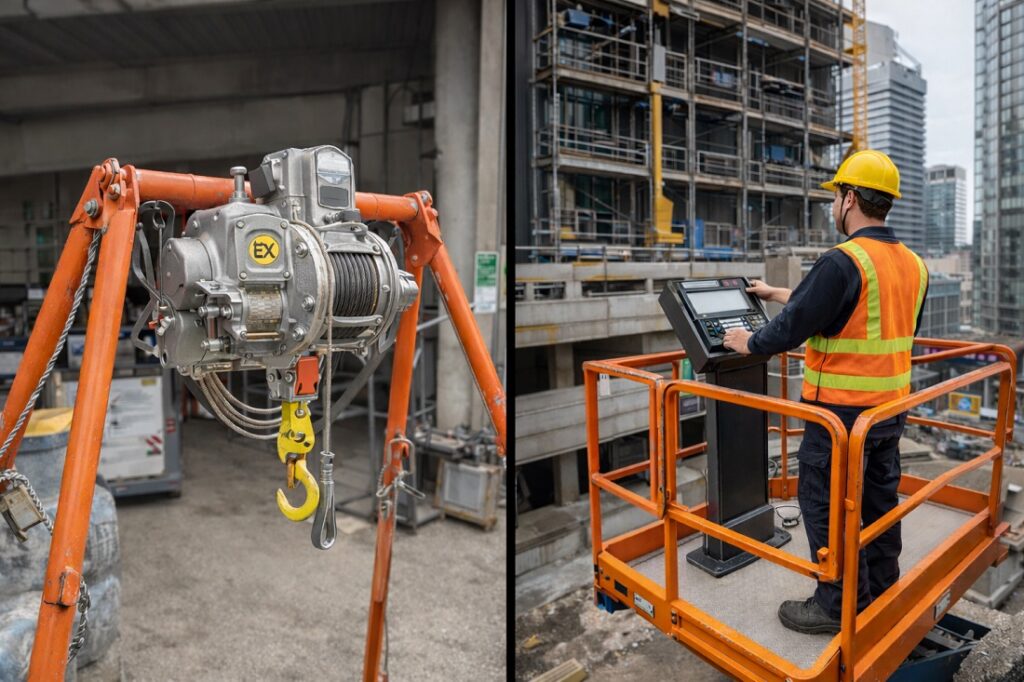

Hazardous work environments demand absolute control over ignition risk, equipment integrity, and regulatory compliance. Refineries, chemical plants, grain handling facilities, and energy sites operate under conditions where a single spark can escalate into a reportable incident. Equipment selection in these settings directly influences operational safety and legal exposure.
The liability risk increases when standard rental equipment is introduced into classified areas without proper verification. This is where explosion proof hoists become a defining factor in risk management decisions, not merely a technical preference.
Understanding Liability in Hazardous Work Environments
Liability in hazardous environments extends beyond immediate injury or damage. It includes regulatory penalties, insurance disputes, shutdown orders, and long-term legal claims. Equipment that fails to meet hazardous-area standards often shifts responsibility from vendors to site operators, regardless of whether it is rented.
What Are Explosion Proof Hoists?
Explosion proof hoists are engineered to operate safely in environments containing flammable gases, vapors, or combustible dust. Electrical components are enclosed to prevent ignition, and mechanical systems are designed to limit heat and spark generation. An explosion proof elevator applies the same principles to vertical transport, ensuring controlled operation within classified zones.
What Does “Rental Equipment” Typically Mean on Industrial Sites?
Rental equipment is often selected for convenience and short-term cost control. In many cases, rental hoists are designed for general industrial use rather than classified environments. Unless explicitly specified, rental units rarely meet hazardous-location certification requirements expected of explosion proof hoists.
The Critical Difference Between Explosion Proof and Standard Rental Hoists
The difference lies in certification, design intent, and liability transfer. Explosion proof hoists are built to meet NEC, CSA, ATEX, or IECEx requirements. Standard rental hoists are not. When a non-certified unit is used in a hazardous area, responsibility shifts to the site that approved its use.
Where the Liability Mistake Happens
The mistake occurs when rental availability is mistaken for compliance. A site may assume that rental documentation implies suitability. Without verified hazardous-area certification, the use of standard equipment in place of an explosion proof elevator creates immediate compliance gaps.
Compliance Gaps That Trigger Legal Exposure
Regulatory agencies focus on equipment classification, installation records, and certification labels. Missing documentation or mismatched equipment classification often leads to citations. These gaps are common when explosion proof hoists are substituted with standard rentals under time pressure.
Rental Agreements vs Real-World Responsibility
Rental agreements frequently limit supplier liability once equipment is delivered. Operational responsibility remains with the site owner or contractor. If a non-certified hoist causes an incident, legal responsibility does not revert to the rental provider, even if the equipment was supplied in good condition.
Incident Scenarios That Turn Rentals Into Legal Nightmares
Common scenarios include ignition during lifting operations, electrical faults in classified zones, or overheating components. In these cases, investigators focus on whether explosion proof hoists should have been used. Rental status offers no protection once improper equipment selection is identified.
Insurance Implications of Using Non-Certified Rental Equipment
Insurance policies often exclude coverage when equipment does not meet regulatory requirements. Claims involving non-certified hoists in hazardous environments are frequently denied. Properly specified explosion proof elevator systems help maintain insurability and coverage validity.
Cost Comparison: Short-Term Rental Savings vs Long-Term Liability Costs
Rental equipment may appear cost-effective initially. However, legal fees, fines, downtime, and insurance disputes far exceed the difference in upfront costs. Explosion proof hoists reduce financial exposure by addressing risk at the equipment selection stage.
Why Explosion Proof Hoists Reduce Operational and Legal Risk
Certified equipment demonstrates due diligence. Explosion proof hoists provide documented compliance, predictable operation, and defensible safety decisions. These factors reduce enforcement actions and support safe continuity of operations.
When Rental Equipment Might Be Acceptable
Rental equipment may be appropriate for non-classified environments or for use outside hazardous zones. Clear boundary definition and documented risk assessment are required before excluding explosion proof hoists from a site plan.
Questions Every Site Manager Should Ask Before Renting
Key questions include certification status, hazardous-area rating, inspection documentation, and operational limits. If answers are unclear, the equipment likely does not meet explosion proof elevator requirements.
Common Mistakes Inspectors and Investigators See Repeatedly
Inspectors frequently identify uncertified equipment operating in classified zones, missing labels, and incomplete documentation. These findings are common precursors to enforcement action involving explosion-proof hoists.
How to Make the Right Decision Before an Incident Occurs
Risk assessment must precede procurement. Equipment selection should align with site classification, regulatory requirements, and insurance obligations. Early commitment to certified systems prevents reactive decisions later.
Liability Is Created at the Equipment Selection Stage
Liability in hazardous environments is rarely accidental. It is created when equipment is selected without full consideration of compliance and risk. Choosing certified explosion-proof hoists establishes a defensible safety position and protects long-term operations.
UCEL Inc. provides engineered lifting solutions designed for hazardous and regulated environments across Canada and the USA.
For sites evaluating permanent systems or a compliant flameproof hoist, connect with UCEL Inc. to reduce operational risk before liability becomes unavoidable.