
Industrial identification has evolved significantly over the past few decades, particularly in manufacturing hubs like Toronto. As equipment becomes more complex and compliance requirements more defined, businesses require marking methods that are accurate, permanent, and adaptable. This shift has driven widespread adoption of metal engraving in Toronto, with laser-based processes now supporting a broad range of modern industrial needs.
Laser engraving has moved beyond niche applications and is now a core process used across manufacturing, utilities, construction, and commercial facilities. Its ability to produce consistent, long-lasting results makes it well-suited to environments where clarity and durability are essential.
How Laser Engraving Has Evolved in Toronto
Toronto’s industrial landscape has long relied on engraving for equipment identification, safety labeling, and traceability. Earlier methods focused on mechanical engraving or chemical etching, which served their purpose but required more manual intervention and offered limited flexibility.
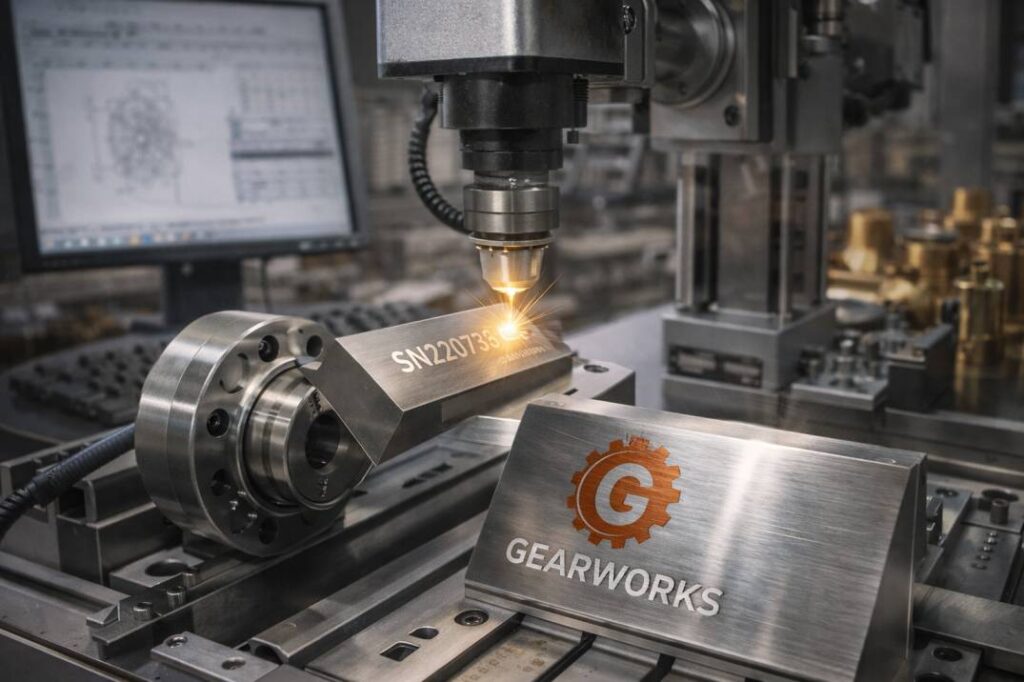
As production volumes increased and design requirements became more precise, laser technology emerged as a practical alternative. Today, laser engraving services allow manufacturers and fabricators to engrave detailed information with minimal material distortion and repeatable accuracy. This evolution has supported faster turnaround times and more consistent results, particularly for large or complex orders.
The availability of advanced laser systems across the Greater Toronto Area has also made precision engraving accessible to a wider range of industries, from small fabrication shops to large industrial facilities.
Benefits of Laser Engraving Services
One of the defining advantages of laser engraving is precision. Lasers can engrave excellent text, detailed graphics, and machine-readable elements such as barcodes and QR codes. This level of detail is difficult to achieve consistently with traditional methods.
Permanence is another key benefit. Laser engraving alters the metal’s surface directly, creating markings that resist wear, chemicals, heat, and repeated cleaning. For engraved metal plates used in industrial settings, this permanence ensures information remains legible throughout the equipment’s service life.
Versatility further enhances the value of laser engraving. The process can be applied to a wide range of metals, including aluminum, stainless steel, and brass. It supports varying depths, contrasts, and layouts, allowing businesses to tailor identification to specific operational requirements.
Together, these benefits make laser engraving a reliable solution for environments where accuracy and durability are critical.
Comparison With Traditional Etching Methods
Before laser technology became widely available, many industries relied on chemical or mechanical etching to mark metal surfaces. While effective in specific applications, these methods have limitations when compared to modern laser processes.
Traditional etching often involves chemicals that selectively remove material. This can produce readable markings, but the process may be less precise for fine details or complex designs. Mechanical engraving, on the other hand, physically cuts into the metal using tools, which can result in tool wear, variation, or surface stress.
By contrast, laser engraving is a non-contact process. It reduces mechanical stress on the material and allows for consistent replication across multiple parts. For businesses that require uniform engraved metal tags across large equipment inventories, this consistency is a significant advantage.
Laser engraving also simplifies design changes. Adjustments can be made digitally without retooling, making it easier to update layouts, serial numbering systems, or compliance information.
Common Uses: Equipment Tags, Panels, and Signage
The practical applications of metal engraving in Toronto span many industries and use cases. Some of the most common include:
- Equipment Tags: Machinery and tools are engraved with serial numbers, specifications, and asset IDs to support tracking and maintenance.
- Control Panels: Engraved labels help identify switches, circuits, and operating instructions clearly, reducing errors during operation or servicing.
- Safety and Compliance Plates: Permanent markings display warnings, ratings, and regulatory information required for inspections.
- Facility Signage: Durable metal signage provides wayfinding and identification in industrial and commercial spaces.
In each case, laser engraving supports clarity and reliability where printed or adhesive labels may fail. The durability of engraved metal plates ensures information remains accessible even in environments exposed to vibration, moisture, or frequent handling.
Role of Laser Engraving in Modern Industrial Workflows
Beyond individual components, laser engraving plays a role in broader industrial workflows. When integrated with digital design and production systems, engraving can align with asset management software, quality control processes, and documentation standards.
For example, unique identifiers engraved directly on equipment enable teams to link physical assets to digital records. This improves traceability, simplifies audits, and supports lifecycle management. When used consistently, engraved metal tags become part of a facility’s operational infrastructure rather than just a labeling solution.
This alignment between physical identification and digital systems reflects how engraving has adapted to modern industrial demands.
Conclusion
As industries continue to demand accuracy, durability, and efficiency, laser engraving has become an essential tool for industrial identification. The evolution of laser engraving services in Toronto reflects the region’s focus on advanced manufacturing and reliable production methods.
From equipment tags and control panels to safety plates and facility signage, laser engraving supports applications where permanence and precision matter. Businesses that rely on metal engraving in Toronto benefit from markings that remain clear under real-world conditions while accommodating modern design and compliance requirements.
By integrating precision engraving into identification strategies, organizations can maintain clarity, consistency, and reliability across their operations.