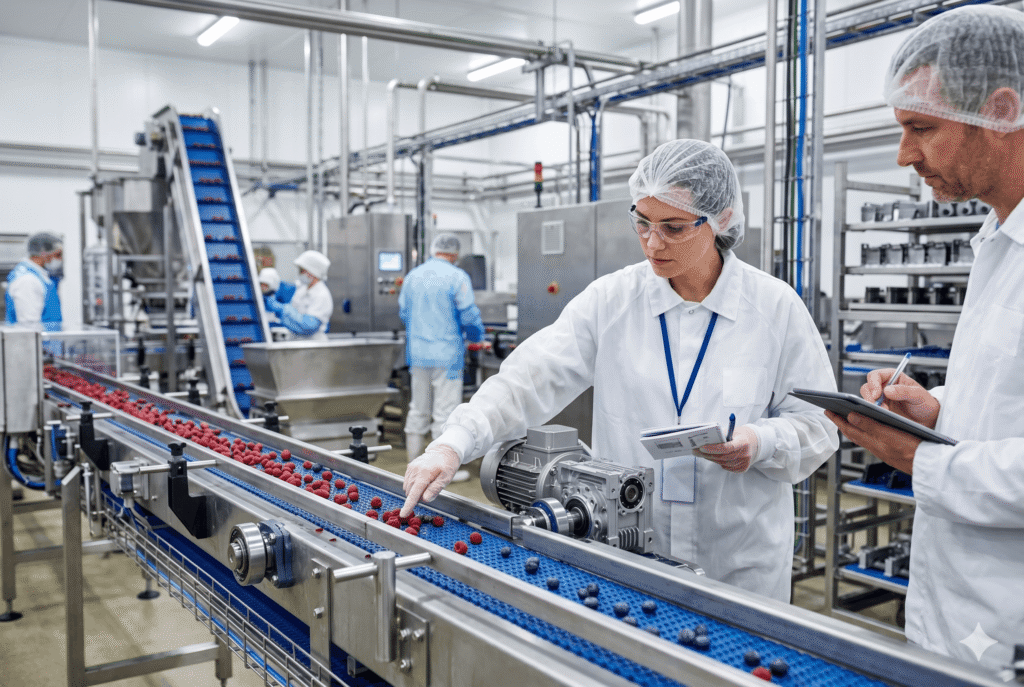

High-speed food processing environments require precision, hygiene, and consistent performance across every stage of material handling. Selecting the right conveyor components directly affects throughput, product integrity, and compliance with food safety requirements. Poor selection can introduce inefficiencies, increase contamination risk, and lead to unplanned downtime.
A structured evaluation process ensures that materials, configurations, and maintenance strategies align with operational demands. The following steps outline how to select belt conveyor parts for optimized performance in high-speed environments.
1. Assess Material Compatibility for Conveyor Components
Material selection influences durability, hygiene, and load-bearing capability. Polymer-based components provide corrosion resistance and flexibility, while stainless steel supports higher structural strength under continuous mechanical stress.
Material properties also affect long-term performance:
- Resistance to chemical exposure
- Load distribution under continuous operation
- Suitability for high-moisture environments
Food processing facilities are increasingly incorporating metal-detectable plastics to support contamination control and align with safety protocols.
2. Match Belt Conveyor Parts to Operating Conditions
Surface texture and belt composition must align with environmental and operational variables such as incline angles, moisture levels, and product characteristics. Food-grade materials, including polyurethane and silicone, are commonly selected for their flexibility and compliance with regulatory standards.
Proper alignment between application and material properties supports:
- Consistent product movement
- Reduced slippage in wet or oily conditions
- Improved resistance to chemical exposure
Well-matched belt conveyor parts help maintain stable product flow under variable processing conditions.
3. Evaluate Washdown Capabilities of Conveyor Components
Sanitation efficiency depends on hygienic design and ease of cleaning. Components designed for washdown environments often feature smooth surfaces, minimal crevices, and simplified disassembly.
Key considerations include:
- Tool-less removal for faster cleaning cycles
- Surface finishes that reduce residue accumulation
- Corrosion-resistant materials for repeated washdown exposure
Facilities adopting hygienic configurations are often associated with improved cleaning efficiency and better alignment with food safety standards.
4. Verify Compatibility Across Equipment Configurations
Integration with existing equipment requires dimensional consistency and standardized component design. Uniform shaft sizing and modular construction simplify installation and reduce complexity during maintenance.
Standardization supports:
- Faster component replacement
- Reduced dependency on single-source supply
- Improved flexibility for future upgrades
A modular approach allows operations to adapt layouts and configurations without extensive rework.
5. Prioritize Maintenance Frameworks for Conveyor Components
Maintenance planning plays a critical role in long-term reliability. Predictive maintenance strategies help identify wear patterns before failure occurs, supporting consistent performance across production lines.
Effective maintenance frameworks include:
- Monitoring wear indicators on critical components
- Scheduled inspection intervals based on operating conditions
- Standardized replacement strategies for high-wear parts
Operations that adopt structured maintenance practices often experience reduced downtime and improved component lifespan.
6. Balance Cost with Lifecycle Performance
Component selection should consider both initial cost and long-term operational impact. High-quality engineered parts may reduce replacement frequency and support more stable performance over time.
Key evaluation factors include:
- Durability under continuous load
- Compatibility with existing configurations
- Ease of maintenance and replacement
Centralized procurement strategies can also improve consistency in sourcing and reduce variability across installed components.
Conclusion
Selecting the right conveyor components for high-speed food processing requires a methodical approach to material compatibility, operating conditions, sanitation, and maintenance planning. Each decision influences efficiency, compliance, and long-term reliability. A structured selection process supports consistent product flow, minimizes downtime, and improves operational control.
For operations evaluating long-term performance and reliability, Conovey provides engineering support to align component selection with processing requirements. Explore engineered solutions and sourcing options for durable, high-quality conveyor parts designed for demanding processing environments.