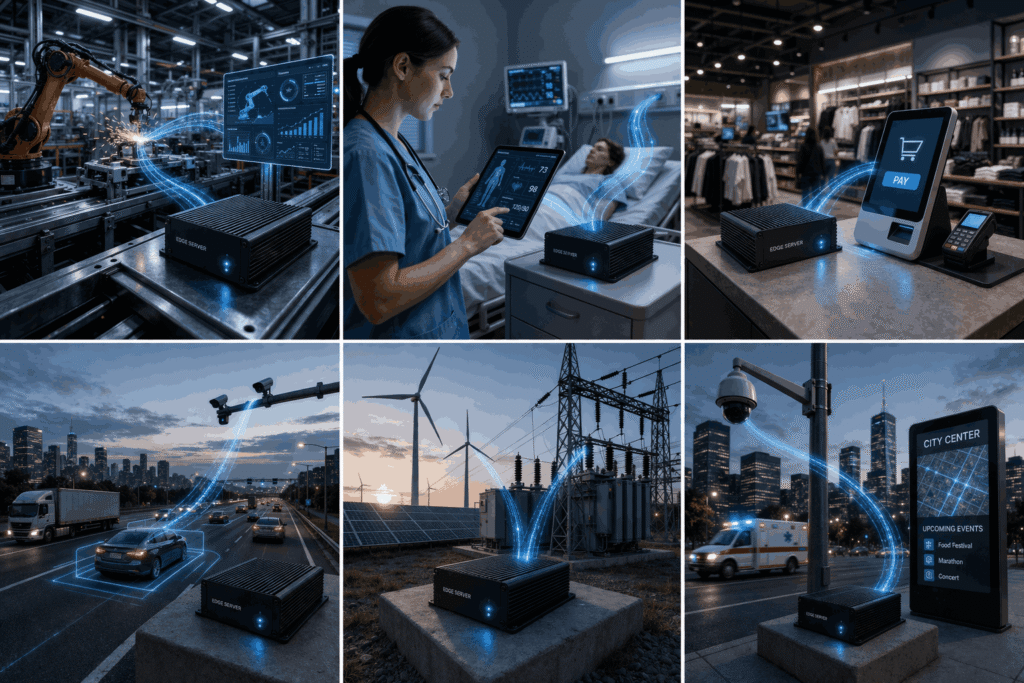

The rapid expansion of artificial intelligence, automation, and connected technologies is transforming global digital infrastructure. Organizations now require computing systems capable of processing data in real time, closer to where it is generated. This shift is accelerating the deployment of Edge computing infrastructure across multiple industries.
Traditional centralized data centers remain essential for large-scale computing, but they are not always suitable for applications that demand ultra-low latency. Edge computing solves this challenge by placing distributed computing resources near operational environments such as factories, hospitals, logistics hubs, and financial centers.
For investors, this transition represents a significant infrastructure opportunity. Edge computing requires large-scale deployment of modular compute nodes, network connectivity, and energy resources across thousands of distributed locations. As industries expand their digital capabilities, demand for scalable edge infrastructure continues to grow.
Several sectors are already creating strong and sustained demand for edge computing platforms.
1. Manufacturing and Industrial Automation
Manufacturing is one of the largest drivers of edge computing adoption. Modern factories rely heavily on robotics, industrial IoT sensors, automated inspection systems, and predictive maintenance technologies.
These systems generate continuous streams of operational data that must be analyzed instantly to maintain production efficiency. Edge computing infrastructure enables manufacturers to process machine data locally, allowing real-time monitoring of equipment performance and faster response to potential failures.
For investors, smart manufacturing creates a scalable infrastructure opportunity. Large manufacturing networks often operate across dozens or even hundreds of facilities, each requiring localized compute capacity. As global industries continue investing in automation and AI-driven production systems, distributed computing infrastructure will play a critical role in supporting these environments.
2. Healthcare and Medical Technology
Healthcare systems are rapidly becoming more data-driven. Hospitals, diagnostic centers, and medical research facilities rely on advanced imaging technologies, patient monitoring systems, and AI-assisted diagnostics.
Many of these applications require immediate processing of sensitive medical data. Edge computing infrastructure allows healthcare providers to analyze information locally, reducing latency while also strengthening data security and compliance with privacy regulations.
The healthcare sector represents a long-term infrastructure growth market for investors. As medical institutions expand their use of digital health platforms and AI diagnostics, demand for localized computing resources will increase across hospital networks, research facilities, and telemedicine platforms.
3. Retail and Consumer Technology
Retail organizations operate thousands of physical locations that rely on real-time digital systems. Smart inventory management, automated checkout technologies, and customer analytics platforms generate continuous streams of transactional data.
Edge computing enables retailers to process this data directly within store environments. Localized analytics improves operational efficiency, supports faster decision-making, and enhances customer experience.
From an investment perspective, the retail sector creates large-scale deployment opportunities for edge infrastructure. Major retail chains operate extensive global store networks, each requiring secure and reliable computing resources. As retailers continue integrating AI-powered analytics and automation into their operations, distributed edge infrastructure will become an essential component of modern retail technology.
4. Energy and Utilities
Energy companies operate highly distributed infrastructure systems that include renewable energy farms, substations, smart grids, and power distribution networks.
These systems generate vast amounts of operational data used to monitor equipment performance, predict maintenance requirements, and optimize energy distribution. Edge computing platforms enable real-time analysis of grid activity and energy production, improving reliability and operational efficiency.
For investors, the intersection of digital infrastructure and energy systems represents a compelling opportunity. As renewable energy deployments expand and energy networks become more intelligent, localized computing capacity will be required to support monitoring and automation systems across large geographic regions.
5. Transportation and Logistics
Modern transportation and logistics networks depend on real-time data processing. Fleet management systems, autonomous vehicle technologies, and logistics coordination platforms continuously generate telemetry and operational data.
Edge computing infrastructure allows logistics companies to process data near transportation hubs, warehouses, and distribution centers. This improves route optimization, enhances supply chain coordination, and supports emerging autonomous transportation technologies.
The scale of global logistics networks creates substantial infrastructure demand. As e-commerce continues expanding and supply chains become increasingly automated, distributed computing resources will be required across transportation corridors and logistics hubs worldwide.
6. Financial Services and Fintech
Financial institutions operate some of the most latency-sensitive digital systems in the world. High-frequency trading platforms, fraud detection tools, and digital banking systems require extremely fast data processing.
Edge computing infrastructure allows financial firms to deploy localized compute resources near financial exchanges and major economic centers. This improves transaction speed, increases system reliability, and strengthens real-time risk analysis.
For investors, financial services represent a premium market for high-performance computing infrastructure. As fintech platforms and digital banking services expand globally, the need for distributed low-latency infrastructure will continue to grow.
Why Edge Computing Represents a Long-Term Infrastructure Investment
The global digital economy is moving toward decentralized computing architectures. Artificial intelligence, IoT devices, and automated systems require computing resources that operate closer to where data is created.
This transition is creating a new class of digital infrastructure focused on distributed computing networks. Edge computing platforms enable organizations to deploy scalable compute resources across industries while maintaining low latency and operational reliability.
For investors, this evolution represents a long-term growth opportunity. Industries such as manufacturing, healthcare, retail, energy, transportation, and finance are rapidly expanding their reliance on real-time data processing. Each sector requires localized infrastructure capable of supporting AI-driven operations and connected technologies.
Companies developing scalable edge infrastructure are therefore positioned at the center of this transformation.
Flux Core Data Systems develops advanced renewable-powered edge computing platforms designed to support next-generation AI infrastructure. As demand for distributed computing continues to grow, scalable edge infrastructure will play an increasingly important role in the future of global digital systems.