
Selecting between end-suction and inline centrifugal pumps affects more than just hydraulic output. Pump configuration shapes mechanical room layout, piping design, maintenance access, and lifecycle cost.
Industrial facilities rely on centrifugal water pumps for fluid transfer, chemical circulation, cooling loops, and process support. When configuration aligns with facility planning goals, system reliability improves, and downtime risks decline.
Understanding the structural and hydraulic differences between these two common centrifugal pump types helps engineering teams make informed decisions.
Understanding the Two Configurations
Both pump types use the same centrifugal operating principle. An impeller rotates inside a casing to convert rotational energy into fluid velocity and pressure.
The distinction lies in casing orientation and suction discharge layout:
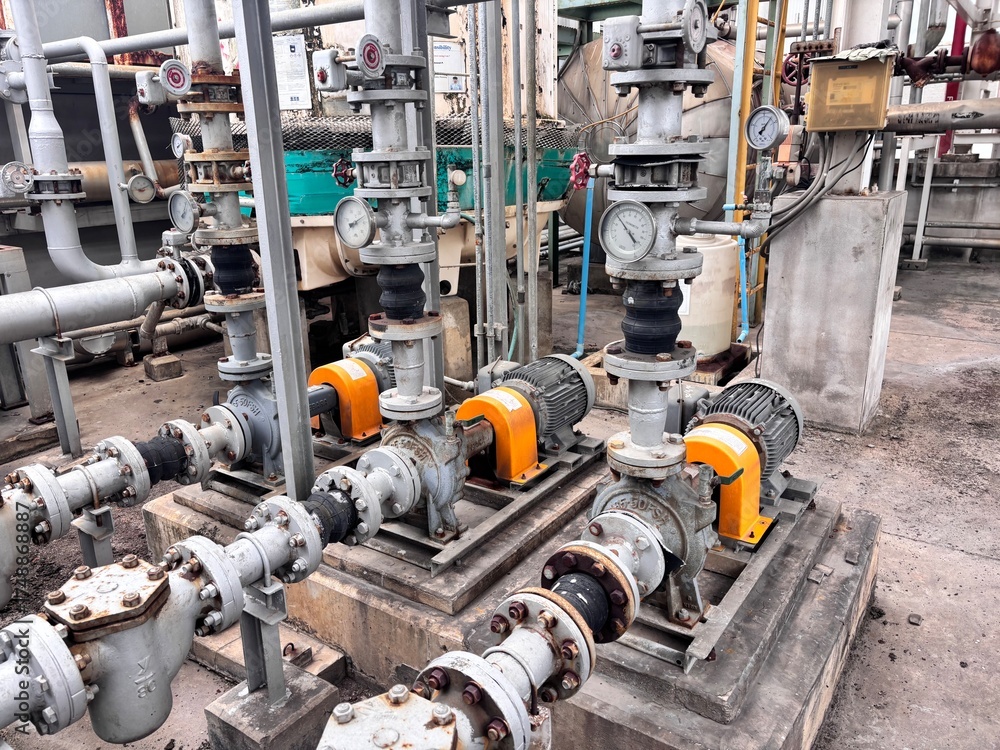
End suction centrifugal pumps
- Fluid enters the pump from one end.
- Discharge exits at a right angle.
- The pump mounts on a baseplate.
- A coupling connects the pump and the motor.
Inline centrifugal pumps
- Suction and discharge ports align on the same centerline.
- The pump installs directly within the piping system.
- The motor often mounts vertically above the pump body.
While both designs move fluid efficiently and effectively, configuration affects space planning, installation approach, and service strategy.
Footprint and Mechanical Room Layout Considerations
Facility planning often begins with available space. Mechanical rooms vary in size, ceiling height, and pipe routing limitations.
End suction pumps:
- Require horizontal floor space.
- Need baseplate mounting.
- Offer flexibility in motor sizing.
Inline centrifugal water pumps:
- Reduce floor footprint.
- Integrate directly into vertical piping.
- Work well in tight mechanical rooms.
For retrofit projects, inline pumps often simplify layout adjustments. For new builds, end-suction designs offer flexibility for larger motor frames and higher flow demands.
Installation and Alignment Differences
Installation procedures differ significantly between the two configurations.
End suction pumps require:
- Baseplate leveling.
- Shaft alignment between the pump and the motor.
- Grouting for vibration stability.
- Coupling inspection during commissioning.
Inline centrifugal pumps:
- Mount directly in the piping.
- Typically requires less alignment work.
- Eliminate the need for separate baseplates.
However, piping support becomes critical with inline pumps. Improper pipe strain can affect mechanical seals and bearing life. Proper structural support remains essential for long-term reliability.
Maintenance Accessibility and Service Downtime
Maintenance strategy plays a key role in facility efficiency.
End suction pumps:
- Offer easier access to bearings and seals.
- Allow back pull-out designs in many models.
- Provide space for motor servicing.
Inline centrifugal pumps:
- May require vertical clearance for motor removal.
- It can complicate access in tight ceiling spaces.
- Reduce floor clutter, but this may limit service angles.
Facilities that prioritize quick seal replacement or bearing maintenance often evaluate physical clearance carefully before selecting a configuration.
Hydraulic Performance and System Efficiency
Hydraulic efficiency depends on impeller design, speed, and system curve. Both configurations can achieve similar flow and head ratings when sized properly.
Important hydraulic considerations include:
- Required flow rate.
- Total dynamic head.
- Net positive suction head available.
- Fluid characteristics such as viscosity and temperature.
End-suction pumps often handle higher flow rates in industrial applications. Inline centrifugal pumps in Canada commonly serve HVAC loops and moderate process duties. The configuration should support the required duty point without oversizing, which increases energy consumption.
Selecting the Configuration That Matches the Facility
Facility planning decisions should reflect:
- Available floor and vertical space.
- Required hydraulic performance.
- Maintenance accessibility goals.
- Installation budget.
- Long-term service strategy.
Both end-suction and inline centrifugal pumps play valuable roles in industrial systems. The most effective choice aligns mechanical layout with operational demands.
Facilities evaluating centrifugal pump suppliers and options can contact Vissers Sales Corp. to assess available centrifugal pump configurations for industrial use.