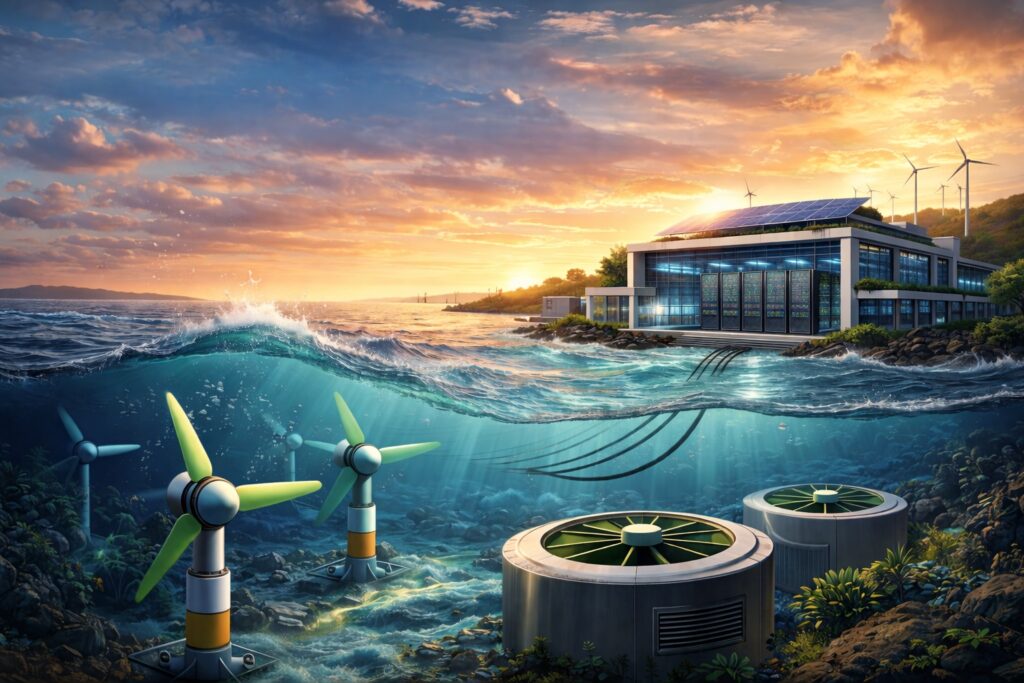

Tidal energy is generated by capturing the predictable movement of ocean tides. Unlike wind or solar, tides follow known cycles driven by lunar gravity. This predictability makes tidal power attractive for infrastructure that depends on steady electricity.
For data centers, reliability matters more than peak output. Tidal powered data centers are explored because they align with long-term energy planning. Power generation can be forecast years ahead. This reduces uncertainty for operators managing compute-intensive workloads.
Tidal energy systems use underwater turbines or tidal stream devices. These installations convert kinetic energy into electricity near coastal locations. While deployment remains site-specific, interest continues to grow in regions with strong tidal ranges.
Why Could Tidal Energy Support Data Center Operations?
Data centers require continuous, stable power. Downtime impacts performance, security, and service delivery. Tidal powered data centers are evaluated because tidal energy behaves more like baseload power than intermittent renewables.
Key operational advantages include:
- Predictable power output aligned with tidal cycles
- Reduced exposure to grid congestion in coastal regions
- Long-term cost stability compared to volatile energy markets
For Tidal data centers, energy predictability supports capacity planning. Operators can design infrastructure around known generation windows. This improves power modeling and operational efficiency.
How Does Tidal Power Compare With Other Renewables?
Solar and wind dominate renewable adoption today. They scale quickly and work across many geographies. However, both depend heavily on weather patterns. Energy output can fluctuate unexpectedly.
Tidal energy powered data centers offer a different value. Tidal cycles are consistent and measurable. This reliability can reduce dependence on oversized storage systems. It also supports steady workloads such as AI inference and edge computing.
That said, tidal power is not universally deployable. Solar and wind remain more flexible. Tidal run data centers are best suited for coastal or marine-adjacent locations with proven tidal strength.
What Environmental and Logistical Challenges Exist?
Despite its promise, tidal energy faces real constraints. Development requires careful environmental assessment and long permitting timelines. Marine ecosystems must be protected throughout installation and operation.
Primary challenges include:
- Limited geographic suitability for tidal generation
- Higher upfront infrastructure costs
- Complex marine permitting requirements
Tidal run data centers must also address grid integration and storage needs. Power output follows cycles, not constant flow. Hybrid energy models are often required to ensure uninterrupted operations.
What’s Next for Tidal Energy and Data Center Integration?
Tidal energy remains an emerging option. Most deployments today are pilots or research-backed projects. However, interest continues as data center power demand increases.
Future progress depends on:
- Improved turbine efficiency
- Lower installation costs
- Clear regulatory frameworks
- Integration with modular data center designs
As decentralized infrastructure expands, tidal energy may complement other renewables. Tidal powered data centers could become part of hybrid energy strategies rather than standalone solutions.
How Does This Align With Modern Distributed Infrastructure?
We operate at the intersection of renewable energy and digital infrastructure. The company deploys modular, resilient data centers powered by clean energy systems.
We enable rapid deployment, often within 90 days. Through Compute Purchase Agreements, enterprises gain on-demand compute without long development cycles. This model supports secure, low-latency, decentralized computing across the U.S.
Explore how to turn renewable energy into scalable digital capacity. Learn how resilient, distributed data centers can power the future of AI and cloud infrastructure.