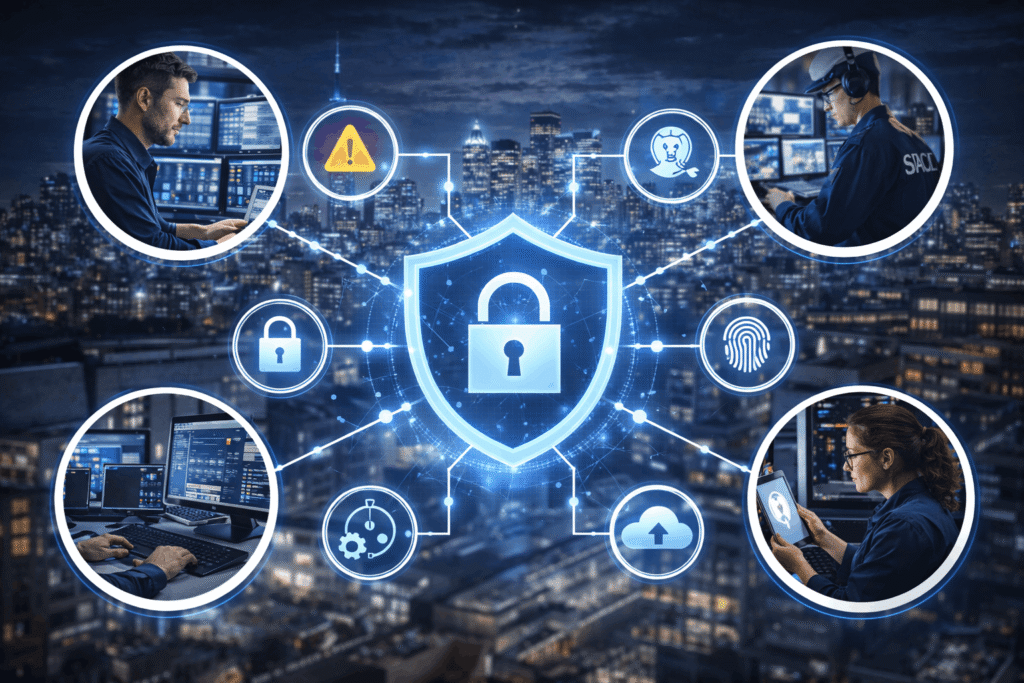

Toronto businesses operate in an increasingly complex digital environment. Cyber threats are more targeted, compliance expectations are rising, and hybrid work models have expanded the attack surface. Relying on isolated tools or reactive fixes is no longer enough. Organizations require structured protection that operates continuously and aligns with operational goals.
Working with a qualified managed security service provider enables businesses to implement coordinated defense strategies rather than fragmented solutions. Below are five essential managed cybersecurity services that every Toronto organization should consider implementing to strengthen resilience and reduce risk.
1. 24/7 Threat Monitoring and SIEM
Continuous monitoring is the foundation of modern security. Security Information and Event Management platforms collect and analyze logs from servers, endpoints, firewalls, and cloud systems. This allows unusual activity to be identified quickly.
A professional managed security service provider configures, monitors, and tunes SIEM platforms to reduce false positives while improving detection accuracy. Around-the-clock oversight ensures threats are identified outside of regular business hours.
Without structured monitoring, breaches may go undetected for extended periods, increasing financial and reputational damage.
2. Managed Endpoint Detection and Response
Endpoints such as laptops, servers, and mobile devices represent common entry points for attackers. Managed endpoint detection and response services monitor these devices for suspicious behavior and contain threats automatically when necessary.
Integrated within broader managed security services, endpoint protection tools provide real-time visibility into device health and user activity.
Toronto businesses supporting remote or hybrid teams particularly benefit from centralized endpoint management that enforces consistent security policies across distributed workforces.
3. Vulnerability Assessment and Patch Management
New vulnerabilities are discovered regularly across operating systems, applications, and network devices. Without proactive assessment, these weaknesses can remain exposed for months.
Structured vulnerability assessment identifies outdated software, misconfigurations, and unpatched systems. Patch management then ensures updates are applied systematically without disrupting operations.
When delivered through managed cybersecurity services, vulnerability management becomes an ongoing process rather than a periodic checklist item. This reduces exposure and strengthens overall system integrity.
4. Disaster Recovery and Backup Oversight
Cybersecurity extends beyond prevention. It also includes preparedness for recovery. Backup validation, disaster recovery planning, and data integrity monitoring are essential components of a complete security framework.
A reliable managed security service provider ensures backups are encrypted, tested, and recoverable within defined timeframes. Recovery simulations help verify that restoration objectives can be met during an actual incident.
Integrating recovery planning within broader managed security services ensures a coordinated response between containment and system restoration efforts.
5. Incident Response and Compliance Reporting
When a security event occurs, structured response procedures determine how quickly damage is contained. Incident response services include defined escalation workflows, forensic analysis, and communication protocols.
Compliance reporting also plays a critical role. Many industries require documentation of security controls, access logs, and breach response timelines.
Through comprehensive managed cybersecurity services, businesses receive detailed reporting that supports audit readiness and executive visibility. Structured response planning reduces confusion during high-pressure scenarios and improves accountability.
Building a Stronger Security Foundation
Toronto organizations face evolving threats that demand coordinated and continuous protection. Implementing 24 7 monitoring, endpoint detection, vulnerability management, recovery oversight, and structured incident response creates a layered defense framework.
Partnering with an experienced managed security service provider allows businesses to integrate these protections into cohesive managed security services rather than managing isolated tools.
By investing in comprehensive managed cybersecurity services, organizations strengthen resilience, support compliance readiness, and position themselves for sustainable growth in an increasingly digital economy. For more details, contact Pathway Communications now!